

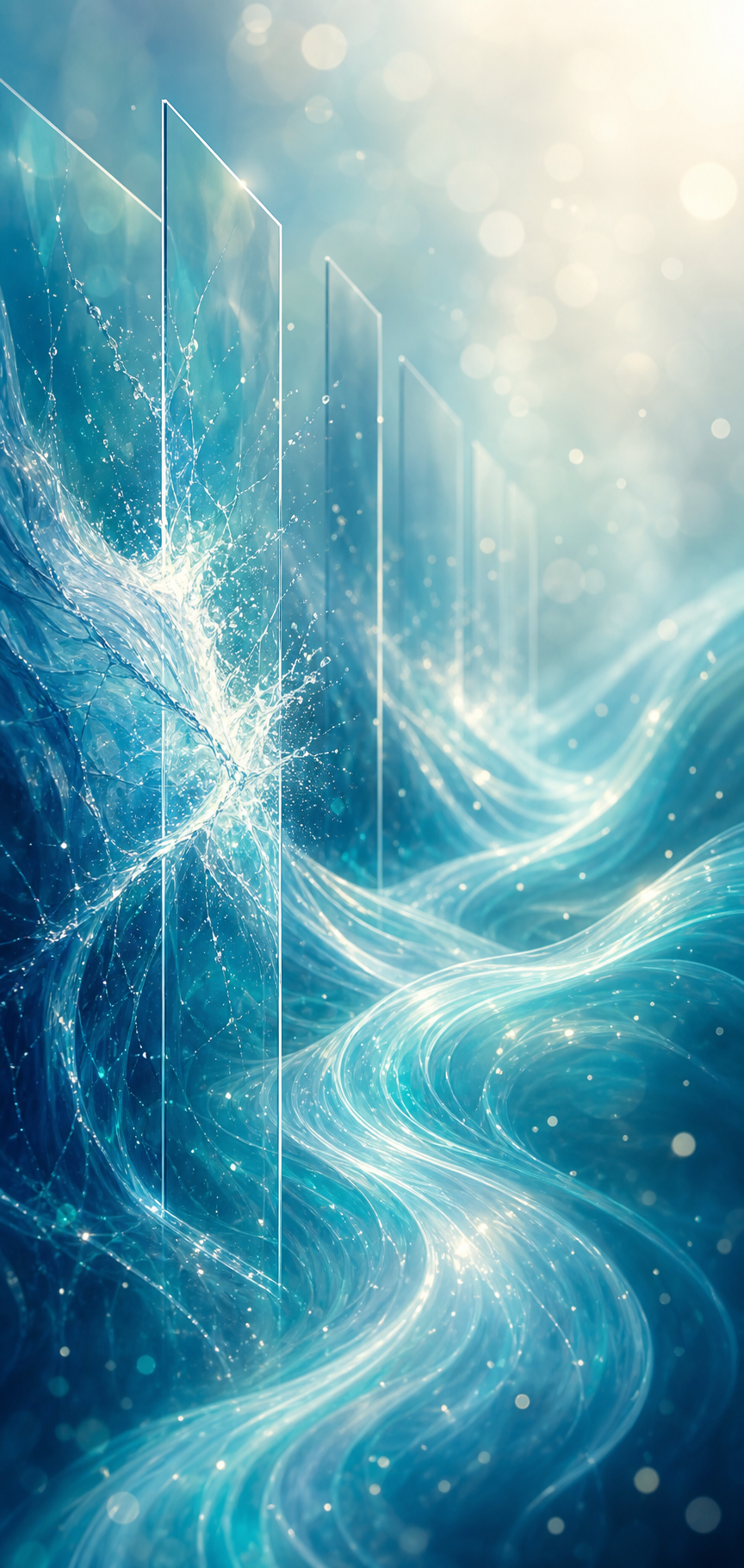
I used to think I was drowning in my emotions. That’s what it felt like—wave after wave crashing over me, pulling me under, leaving me gasping for air. I kept asking: Why do I feel so much? Why can’t I just be calm like other people?
But I had it all wrong.
I wasn’t drowning in the waves. I was breaking myself against walls I didn’t even know I’d built.
The Day I Realized I Was the Ocean
There was a moment—one of those quiet, devastating moments—when I finally understood. I’d been searching everywhere for love, for connection, for someone to make me feel less alone. I was like a single drop of water, moving through the world with hope, thinking surely there’s a shore somewhere, surely there’s a place I belong.
But there was no shore. Just endless water, stretching in every direction. And I got lost in it—not found, not merged with something divine. Just… lost.
I thought that was the end of the story. That I’d dissolve into emptiness and that would be that.
But then something shifted. I realized: What if I’m not the drop? What if I’ve always been the ocean?
When Emotions Become Waves
If I’m the ocean, then my emotions aren’t drowning me. They’re just waves—natural movements across my surface. They come, they rise, they fall. That’s what they do. That’s what they’ve always done.
The ocean doesn’t panic when a wave appears. It doesn’t think, Oh no, not another one. It doesn’t try to make the waves stop or last forever. It just… holds them. Lets them move.
So why couldn’t I do that? Why did every emotion feel like it was going to destroy me?
Because of the walls.
The Walls We Build Without Knowing
Here’s what no one tells you about emotions: the pain doesn’t come from the feeling itself. It comes from what we do when the feeling arrives.
We build walls in our minds—invisible, automatic, unconscious walls made of thoughts:
I shouldn’t feel this way.
If I let myself feel this, I’ll fall apart.
This feeling means something is wrong with me.
I need to fix this, control this, make it stop.
These aren’t just passing thoughts. They’re rigid structures. And when an emotional wave rises—grief over a loss, anger at an injustice, longing for something you can’t have, fear of what’s coming—it doesn’t move through open space.
It crashes against those walls.
And that collision? That’s where the noise comes from. The chaos. The suffering that makes you feel like you’re being torn apart.
The Sound of Breaking
I know that sound intimately. It’s the mental screaming that happens when you’re sad but telling yourself you should be grateful. It’s the exhaustion of being angry while trying to convince yourself to let it go. It’s the ache of wanting something while simultaneously judging yourself for wanting it.
Wave meets wall. Crash. Noise. Pain.
And we think the wave is the problem. We think we’re “too emotional” or “too sensitive.” We think there’s something wrong with us for feeling so much.
But it’s not the wave. It’s never been the wave.
It’s the wall.
What Happens When You Stop Fighting
I’ve been practicing something lately—something that feels simultaneously impossible and incredibly simple.
When an emotion comes, I try not to meet it with thoughts. I don’t build a story around it. I don’t immediately start analyzing why I feel this way or what I should do about it or what it means about my life.
I just… notice.
Oh. Sadness is here.
Ah. Anger is moving through.
I see you, fear. I feel you, longing.
No wall. No resistance. No demand that it be different.
And here’s what I’ve discovered: when there’s no wall, there’s no collision. When there’s no collision, there’s no noise.
The emotion still comes. I still feel it—sometimes intensely. But it doesn’t hurt the same way. It doesn’t create that awful turbulence that makes me feel like I’m being destroyed from the inside.
It just moves. Like a wave across open water.
The Freedom of Being Vast
This isn’t about becoming numb or detached. It’s not about pretending you don’t care or suppressing what you feel.
It’s about recognizing how much space you actually have inside you.
You’re not small. You’re not fragile. You’re not going to shatter if you let yourself feel everything without trying to control it.
You’re the ocean. And the ocean is vast enough to hold storms, to hold stillness, to hold every possible movement of water without breaking.
When you stop building walls, when you stop trying to contain and control and make your emotions behave—something extraordinary happens.
You discover you can hold it all.
Breaking Down the Walls, One Wave at a Time
I won’t lie and say this is easy. The walls have been there a long time. They were built for good reasons—to protect you, to keep you safe, to help you survive moments when the waves felt too big.
But you’re not that small anymore. And those walls that once protected you are now the very thing creating your suffering.
So you practice. One emotion at a time, one wave at a time, you choose not to react. You choose not to build the wall that creates the collision.
You let the wave come.
You let it move through you.
You let it go.
And slowly—slowly—you remember what you’ve always been.
Not the drop that got lost.
Not the wall that keeps breaking.
The ocean itself.
Vast. Deep. Unbreakable.
Holding everything, resisting nothing, flowing with it all.
P.S. If you’re reading this and feeling overwhelmed by your emotions right now—I see you. You’re not too much. You’re not broken. You’re just experiencing the collision between your waves and your walls. And the beautiful thing is: you can choose, in this very moment, to soften those walls just a little. To let one wave move through without resistance. And see what happens.
You might be surprised by how much peace exists in the space between the wave and the wall—when you finally let them both just be.