

Your attention is constantly being baited. Unanswered messages, erratic thoughts, old regrets, a sharp comment from someone at dinner—it hits like continuous turbulence on the surface of water.
If you dive at every ripple, you drown. You exhaust your nervous system trying to resolve minor friction that would have vanished on its own within twenty minutes.
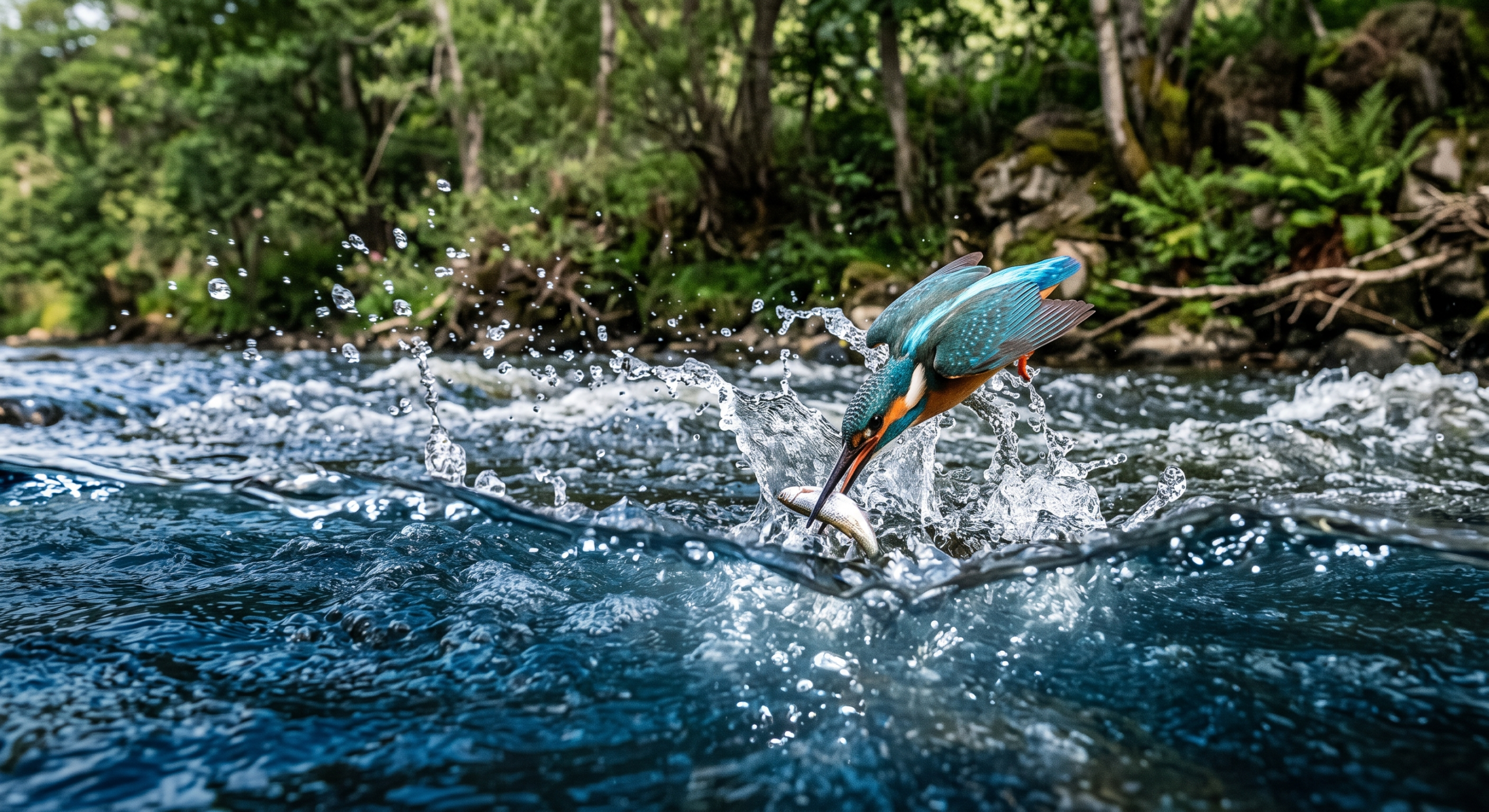
Watch a kingfisher on a branch over a river.
The water below is chaotic—drifting foam, wind ripples, distorted reflections. If the bird chased every flash of movement on the surface, it would starve. So it perches completely motionless. It ignores ninety-nine percent of the noise because it isn’t hunting reflections. It waits for actual substance—a fish beneath the churn—and only then strikes with total commitment.
Most exhaustion isn’t caused by overwork; it’s caused by compulsive reactivity.
Something irritates you, and your instinct is to bite. A frustrating memory surfaces, and you spend twenty minutes mentally arguing with a ghost. You let external friction dictate your internal state, burning energy on things that don’t yield a single calorie of real value.
Non-reaction is not passivity. It is predatory economy.
It means staying on the branch. When a wave of irritation or mental noise hits, you hold your ground for three seconds and ask one cold question: Is this surface foam, or is this real substance?
If it’s noise—an old mental loop, pointless drama, a petty provocation—let the current carry it away. Don’t touch it.
If it requires actual execution, strike cleanly, handle it, and get back to your perch.
Stop throwing yourself into the river for leaves. Save your strike for what counts.
Leave a Reply